

Impressed Current System Power
Your Professional Impressed Current System Power Supplier
The company is a qualified supplier to industry leaders including China National Nuclear Corporation (CNNC), China General Nuclear Power Group (CGN), State Nuclear Power Technology Corporation (SNPTC), Huadian Corporation, China National Petroleum Corporation (CNPC), Sinopec, U.S.-based BV, and South Korea's Samsung.


Why choose us
Complete Qualifications And Leading Technology
It has dual first-level qualifications for mechanical and electrical installation and electronic intelligence and third-level qualifications for professional contracting of environmental protection projects, with a complete technical team and quality management system.
One-Stop Service, Efficient And Worry-Free
From solution design, equipment integration to engineering construction, operation and maintenance, Xiezhixin provides a full-process and comprehensive solution for smart water and environmental protection projects.
Our Services
The company has a strong R&D technical team, a professional environmental protection production base and professional installation and production personnel, and provides high-quality services to more demanding units with the concept of full service.
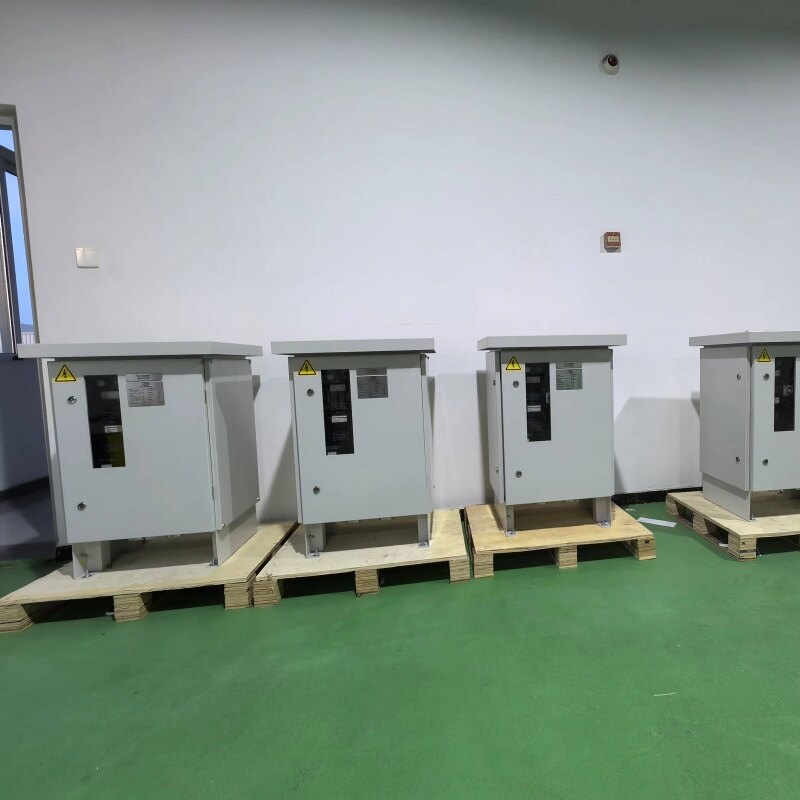
Impressed Current System Power
Impressed Current System Power is an advanced corrosion prevention technique that utilizes an external power source to provide a continuous electrical current to metal structures. This process actively mitigates the electrochemical reactions leading to corrosion, offering superior control and adaptability compared to traditional methods.
Technical Parameter
|
Power supply mode |
AC power supply, DC power supply |
|
Power parameters |
AC400V\AC230V\DC24V |
|
Rectification method |
SCR\IGBT |
|
Control mode |
Constant current, constant voltage, constant potential, intermittent. |
|
Output mode |
Single output, two output, -10 output |
|
Cooling method |
Air cooling, air cooling, oil cooling |
|
Structure mode |
Conventional type, outdoor type, explosion-proof type, portable. |
|
Shell material |
Aluminum shell, carbon steel, stainless steel. |
|
The surface treatment method of the cabinet |
Spraying, spraying paint, galvanizing. |
|
Color |
Specify the color |
|
Installation method |
Base installation, wall-mounted installation. |
|
Installation location |
Indoor and outdoor |
|
Indoor and outdoor |
RS485\GPRS\RJ45\4-20Ma |
|
Protection level |
IP42-IP56 |
|
Input impedance |
≥1MΩ |
|
Insulation resistance |
≥200MΩ |
|
Constant potential accuracy |
±5Mv |
|
Constant current accuracy |
1% |
|
Constant voltage accuracy |
1% |
Advantages of Impressed Current System Power
Higher Current Capacity
ICCP systems deliver much higher protective current than galvanic systems.
Greater System Control
One of ICCP’s biggest benefits is precise control over current output. Operators can easily adjust the rectifier settings to respond to changing conditions or performance data.
Ease of Monitoring and Performance Tracking
ICCP systems provide built-in monitoring at the rectifier, making it easy to track performance and ensure effective protection.
Type of Impressed Current System Power
Galvanic Cathodic Protection
In a galvanic cathodic protection system, the anode is made of a more reactive metal than the structure to be protected. The anode corrodes sacrificially, generating a current that protects the structure. Galvanic anodes are commonly used in situations where the current requirements are relatively low.
Impressed Current Cathodic Protection (ICCP)
In an ICCP system, an external power source is used to drive the current between the anode and the cathode. ICCP systems are more versatile and can be used in a wide range of environments and applications.

Applications of Impressed Current System Power
ICCP finds applications in various industries where corrosion poses a significant threat to infrastructure and equipment.
Maritime Industry
Ships, offshore platforms, and submerged structures benefit from ICCP to protect against corrosion caused by saltwater exposure.
Oil and Gas Pipelines
ICCP is widely used to protect pipelines transporting oil and gas, especially in corrosive environments, preventing leaks and structural deterioration.
Infrastructure
Bridges, piers, and other critical infrastructure exposed to harsh environmental conditions often employ ICCP to extend their service life.
Effect of Impressed Current System Power
ICCP works by applying a direct current to the metal structure. This current suppresses naturally occurring anodic currents and therefore prevents corrosion. Key components of an ICCP system include:
ICCP Anode: This is a titanium element coated in mixed metal oxide capable of delivering high current housed in an insulating material.
Reference Electrode: This is a fixed reference cell, mainly Zinc, measuring the hull potential at the seawater interface.
Power Supply: This device monitors the system performance and automatically provides the electrical current to drive the cathodic protection process.
The anode and reference electrode are mounted through the hull but are electrically insulated from the hull, and the power supply connects to both. When the power turns on, the reference cell measures the hull potential and is compared against a preset value which is suitable to prevent corrosion by delivering the correct amount of current, a current flows from the anode to the structure, impressing a current onto the surface suppressing anodic currents keeping the structure cathodic and protected. Finally, the control unit makes sure the ICCP is performing effectively.
How to use Impressed Current System Power
If you’ve decided to utilize ICCP, the implementation isn’t too different from any other corrosion prevention method.
Here are the steps:
First, evaluate your marine environment and structure to determine the appropriate anode, reference electrode and power supply requirements. For instance, a tropical or subtropical region with high salinity and temperatures may require a higher current demand than a polar region.
Next, develop a detailed design plan. It should include the placement of anodes, power supply, control unit, and cables. You can adjust this plan as needed.
Follow the design plan to install the ICCP system. You might need to hire a technician for proper grounding and cable routing.
However, the work doesn’t end with installation. You’ll need to monitor your ICCP system to ensure protection is being achieved. It’s also wise to monitor and replace the hull equipment if needed. Lastly, calibrate the control unit periodically to make sure the measurements are accurate.
If your ICCP is ineffective, it could be due to several reasons. The main reason is poorly maintained systems left uncalibrated.
It’s also possible that the anode and power supply placements need to be optimized. You can always revise your design plan with the help of an ICCP specialist.
Design and Installation of Impressed Current System Power
Factors to Consider in Designing an ICCP System
When designing an ICCP system, several factors must be considered, including:

Metal Type
The type of metal to be protected affects the design of the ICCP system. Different metals have different corrosion potentials and require different current densities.

Environment
The environment in which the metal structure is located affects the corrosion rate and the required current density.

Current Density
The current density required to protect the metal structure depends on the metal type, environment, and surface area.
Components of Impressed Current System Power
An ICCP system consists of several key components:
Anodes
The anodes are typically made of a more inert material, such as titanium or graphite, and are designed to withstand the corrosive environment.
Cathodes
The cathode is the metal structure to be protected.
Reference Electrodes
Reference electrodes are used to monitor the potential of the cathode and adjust the impressed current accordingly.
Maintain
To ensure the effectiveness of an ICCP system, best practices should be followed during installation and maintenance:
Proper Design: The ICCP system should be designed by a qualified corrosion expert, taking into account the specific application and environmental conditions.
Regular Maintenance: Regular maintenance is necessary to ensure the continued effectiveness of the ICCP system, including monitoring the impressed current, checking the anode condition, and inspecting the cathode for signs of corrosion.
FAQ
As one of the most professional impressed current system power manufacturers and suppliers in China, we're featured by quality products and good price. Please rest assured to buy customized impressed current system power from our factory.
Impressed Current System Power, Transform Rectifier