

Sacrificial Anode
Your Professional Sacrificial Anode Supplier
Shandong Xiezhixin Environmental Protection Technology Co., Ltd., founded in March 2023, with a registered capital of 20 million yuan, is an integrated service provider of environmental protection industry committed to seawater desalination, electrolytic chlorine production, corrosion control and other one-stop solutions.


Why choose us
Complete Qualifications And Leading Technology
It has dual first-level qualifications for mechanical and electrical installation and electronic intelligence and third-level qualifications for professional contracting of environmental protection projects, with a complete technical team and quality management system.
One-Stop Service, Efficient And Worry-Free
From solution design, equipment integration to engineering construction, operation and maintenance, Xiezhixin provides a full-process and comprehensive solution for smart water and environmental protection projects.
Our Services
The company has a strong R&D technical team, a professional environmental protection production base and professional installation and production personnel, and provides high-quality services to more demanding units with the concept of full service.
Sacrificial Anode
Sacrificial Anodes are highly active metals that are used to prevent a less active material surface from corroding. Sacrificial Anodes are created from a metal alloy with a more negative electrochemical potential than the other metal it will be used to protect. The sacrificial anode will be consumed in place of the metal it is protecting, which is why it is referred to as a "sacrificial" anode.
|
Alloy Element |
Type |
Chemical Composition% |
Other elements b |
||||||||||||
|
Mg |
Al |
Zn |
Mn |
Ce |
Zr |
Si |
Fe |
Ca |
Cu |
Ni |
Be |
Sub-total |
Total |
||
|
MgAlZn |
AZ31B |
Balance |
2.5-3.5 |
0.6-1.4 |
0.1-0.2 |
--- |
--- |
≤0.08 |
≤0.003 |
≤0.04 |
≤0.01 |
≤0.001 |
--- |
≤0.05 |
≤0.30 |
|
AZ40M |
Balance |
3.0-4.0 |
0.2-0.8 |
0.15-0.5 |
--- |
--- |
≤0.10 |
≤0.05 |
--- |
≤0.05 |
≤0.005 |
≤0.01 |
≤0.01 |
≤0.30 |
|
|
AZ80A |
Balance |
7.8-9.2 |
0.2-0.8 |
0.12-0.5 |
--- |
--- |
≤0.10 |
≤0.005 |
--- |
≤0.05 |
≤0.005 |
--- |
--- |
≤0.30 |
|
|
AZ91D |
Balance |
8.5-9.5 |
0.45-0.9 |
0.17-0.4 |
--- |
--- |
≤0.08 |
≤0.004 |
--- |
≤0.025 |
≤0.001 |
0.0005- |
≤0.01 |
≤0.30 |
|
|
0.003 |
|||||||||||||||
|
MgMn |
M2M |
Balance |
≤0.20 |
≤0.30 |
1.3-2.5 |
--- |
--- |
≤0.10 |
≤0.05 |
--- |
≤0.05 |
≤0.007 |
≤0.01 |
≤0.01 |
≤0.20 |
|
MgZnZr |
ZK61M |
Balance |
≤0.05 |
5.0-6.0 |
≤0.10 |
--- |
0.3-0.9 |
≤0.05 |
≤0.05 |
--- |
≤0.05 |
≤0.005 |
≤0.01 |
≤0.01 |
≤0.30 |
|
MgMnRe |
ME20M |
Balance |
≤0.20 |
≤0.30 |
1.32-2.2 |
0.15-0.35 |
--- |
≤0.10 |
≤0.05 |
--- |
≤0.05 |
≤0.007 |
≤0.01 |
≤0.01 |
≤0.30 |
Features of Sacrificial Anode


Sacrificial anode is a commonly used electrochemical protection method, which protects the connected metal from corrosion by connecting the protected metal with a more active metal, so that the latter acts as an anode to corrode. The characteristics of the sacrificial anode are mainly reflected in the following aspects:
Active protection: Sacrificial Anode is an active protection method that does not require an external power supply. It uses the corrosion reaction of the anode metal to supply current to the protected metal to prevent it from corroding.
Wide range of application: Sacrificial Anode is suitable for protecting a wide range of metals and alloys, including iron and steel, copper and aluminum. At the same time, it is suitable for a variety of environments and application scenarios, such as sea water, fresh water, soil, etc.
Easy Maintenance: Once installed, sacrificial anodes do not require regular maintenance or replacement. Anode consumption is uniform and its life can be predicted by design.
Economical: Although the initial investment in sacrificial anodes may be high, their long-term effectiveness and low maintenance costs make them a cost-effective method of corrosion protection in the long run.
Environmentally Friendly: Sacrificial anodes do not produce harmful substances or pollute the environment while protecting the metal. It is an environmentally friendly anti-corrosion method.
Automatic adjustment: The current output of the sacrificial anode is automatically adjusted according to changes in environmental conditions and the corrosion rate of the metal to maintain a constant protection effect.
Predictability: Through proper design and calculation, the service life and protection effect of the sacrificial anode can be predicted, which facilitates the maintenance and management of the equipment.
Limitations: Although sacrificial anodes have many advantages, they do have certain limitations. For example, sacrificial anodes may not be effective in high resistivity environments. In addition, for metal structures that require long-term protection, sacrificial anodes may need to be replaced periodically.
Type of Sacrificial Anode
There are a variety of different types of galvanic anodes available, suitable for a range of applications. We manufacture four main types of sacrificial anode in three main alloys that have been specifically developed for use in different environments: Magnesium anodes, aluminium anodes, water box anodes and zinc anodes.
Magnesium anodes
Magnesium anodes are highly electronegative, making them a good option for supplying electrons to more electro-positive steel structures such as pipelines, towers, pilings and bridges. Historically, they have been the most popular anode choice for on-land protection of oil, gas and water pipelines.
Aluminium anodes
Aluminium anodes have a slightly lower voltage rate than their magnesium counterparts, but their slower consumption rate makes them ideally suited for seawater and freshwater applications, such as seawater-based vessels, mechanical equipment, marine engineering and harbour facilities, seawater pipelines, ship hulls, ballast tanks, drilling platforms, and wind turbine foundations.
Water box anodes
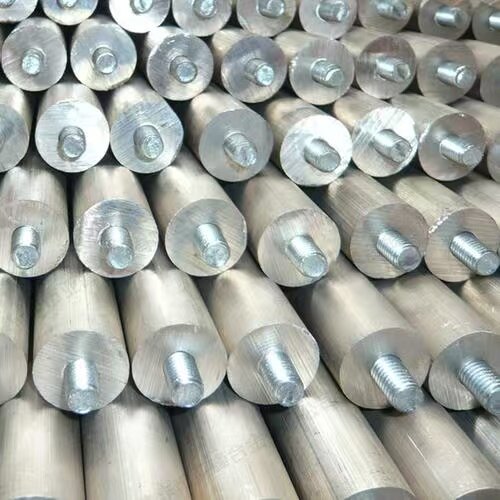
Available in both magnesium and aluminium types (depending on application), water box anodes are an important component in the protection of almost any enclosed water tank or pressurised vessel. Such tanks, including all domestic hot water tanks, a prone to accelerated corrosion within the steel tank and require relatively small anodes to slow down the internal corrosion. These anodes are often extruded cylinders of either aluminium or magnesium, and are commonly inserted into the tank via a threaded end-cap.
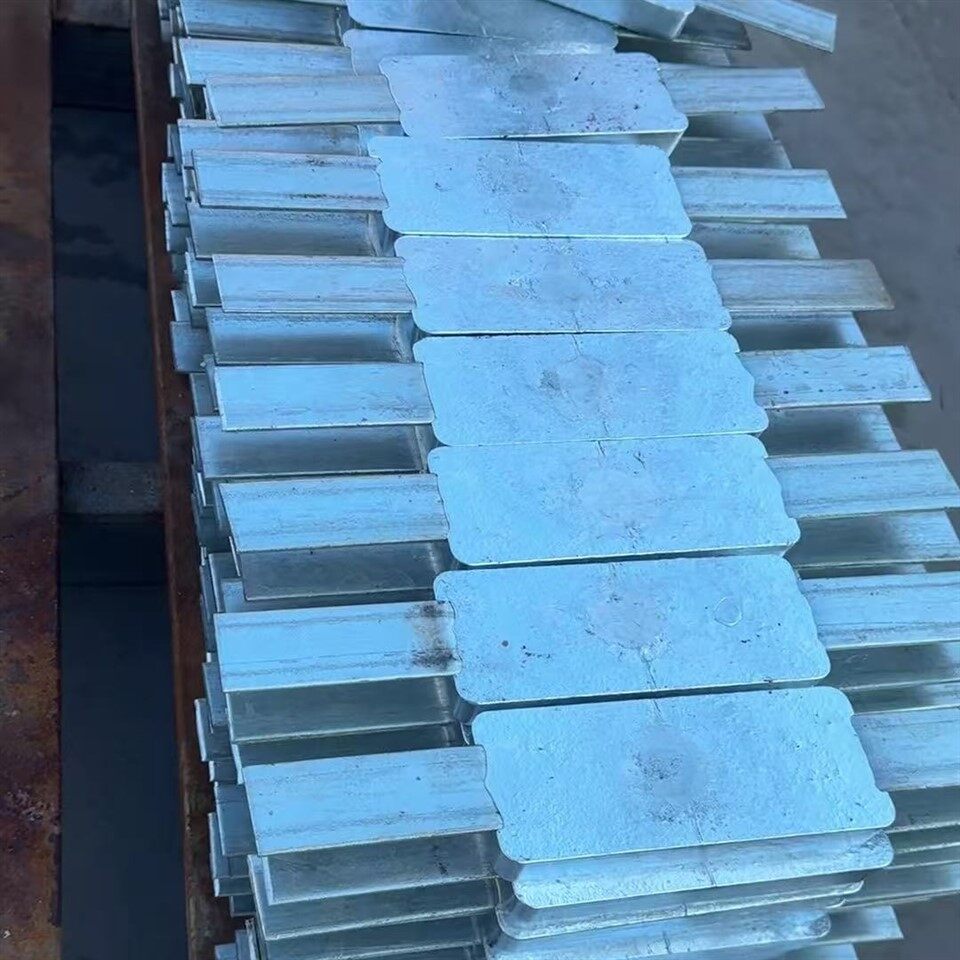
Zinc ribbon anodes
Zinc ribbon anodes offer a flexible, simple, cost-effective and low-maintenance solution to corrosion control.
Applications of Sacrificial Anode
Sacrificial anodes are a type of metal that are used to protect other metals from corrosion. They work by corroding themselves instead of the metal they are protecting. This sacrificial corrosion prevents the metal from rusting or corroding, thus extending the lifespan of the equipment.
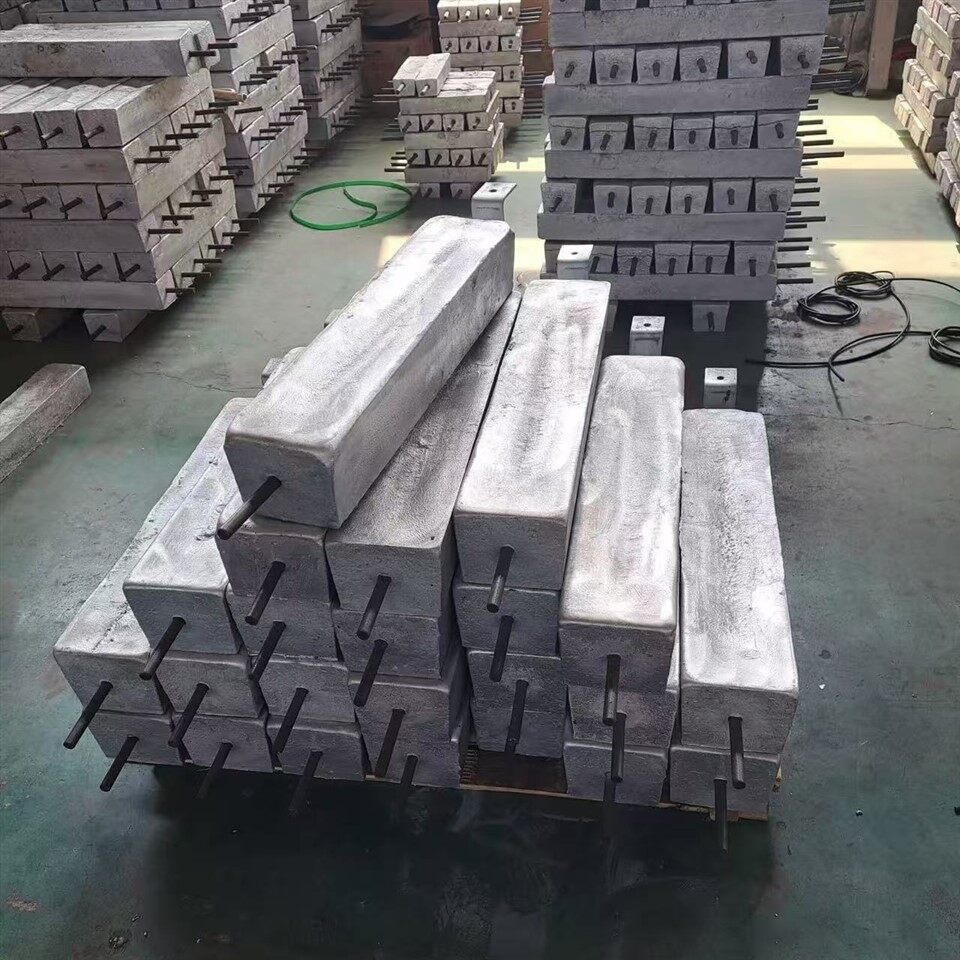
Marine industry
The marine industry is perhaps the most common application for sacrificial anodes. Boats and other structures that are exposed to saltwater are particularly vulnerable to corrosion. Saltwater is highly corrosive to metals, and can quickly eat away at the hulls of boats, as well as other metal structures that are exposed to it. Zinc anodes are particularly effective in this application due to their high level of reactivity. They are often used on the hulls of boats, as well as on other metal components that are exposed to saltwater, such as propellers and rudders.
Oil and gas industry
The oil and gas industry is another common application for sacrificial anodes. Pipelines, offshore platforms, and other equipment that is used in this industry is often exposed to harsh environmental conditions, including saltwater and freshwater. Aluminum anodes are often used in this industry due to their effectiveness in freshwater environments. Sacrificial anodes are critical in this industry, as corrosion can cause leaks and other safety hazards.
Water treatment systems
Sacrificial anodes are sometimes used in water treatment systems to protect pipes and other equipment from corrosion. Magnesium anodes are often used in this application due to their effectiveness in freshwater environments. Corrosion can cause leaks and other problems in water treatment systems, so sacrificial anodes are an important tool in preventing these issues.
Infrastructure and construction
Sacrificial anodes are also used in construction and infrastructure projects to protect metal structures, such as bridges and buildings, from corrosion. Zinc anodes are often used in this application due to their high level of reactivity and effectiveness in protecting large structures. Corrosion can weaken metal structures over time, making them less safe and requiring costly repairs. By using sacrificial anodes, these structures can be protected and their lifespan extended.

Installation of sacrificial anode
Sacrificial anodes are normally supplied with either lead wires or cast-m straps to facilitate their connection to the structure being protected. The lead wires may be attached to the structure by welding or mechanical connections. These should have a low resistance and should be insulated to prevent increased resistance or damage due to corrosion. When anodes with cast-in straps are used, the straps can either be welded directly to the structure or the straps can be used as locations for attachment.
A low resistance mechanically adequate attachment is required for good protection and resistance to mechanical damage. In the process of providing electrons for the cathodic protection of a less active metal the more active metal corrodes. The more active metal (anode) is sacrificed to protect the less active metal (cathode). The amount of corrosion depends on the metal being used as an anode but is directly proportional to the amount of current supplied.
How Sacrificial Anodes Work
The way that a sacrificial anode works is the same as the way that an electrochemical cell works. The sacrificial anodes have a kind of protected metal that is on the cathode side. That is the negatively charged side of the device.
A more reactive metal or alloy is on the anode side, or the positive side. It's important to note that the metal or alloy on the anode side must have a larger potential difference than the metal on the cathode side.

Once these two metals are in place, the reaction will occur spontaneously.
An oxidation reaction will occur at the anode. Oxidation means that the substance will lose electrons. While this is happening, a reduction reaction will happen at the cathode side. This means that the substance will gain electrons.
The production of both the oxidation and reduction reactions at once is known as a redox reaction. The oxidation at the anode side will ensure that that sacrificial metal will corrode. The reduction reaction at the cathode sign will prevent the metal on that side from becoming eroded.
Check the condition of the sacrificial anode
Since the sacrificial anode is immersed in the tank, you’ll have to drain the water heater to check its condition.
Depending on the model, you’ll either have to drain it partially or empty the water heater completely. Make sure you know how to carry out the draining process before you begin. Then, follow these steps:
First, turn off the power to your water heater.
Consult the manufacturer’s manual to locate the anode rod. Its location depends on your water heater model. Most are accessible from the top of the appliance, hidden under a plastic cap. You may have to remove insulating material to reach it.
Now drain the tank, at least partially.
Remove the corroded anode rod with a 1 1/16-inch socket wrench. Wearing work gloves is recommended for this step since the rod might be hot. You should expect some resistance at first before the worn-out anode gets freed.
Install the new anode and restart your water heater by completing the draining process.
FAQ
As one of the most professional sacrificial anode manufacturers and suppliers in China, we're featured by quality products and good price. Please rest assured to buy customized sacrificial anode from our factory.
hg hgo reference electrode, working electrode reference electrode counter electrode, electrode agcl ag