

Can marine sacrificial anodes be used in marine cages? This is a question that has intrigued many in the aquaculture and marine engineering sectors. As a supplier of marine sacrificial anodes, I've had numerous discussions with clients and experts on this very topic. In this blog, I'll delve into the science behind marine sacrificial anodes, their potential application in marine cages, and the considerations one must take into account.

Understanding Marine Sacrificial Anodes
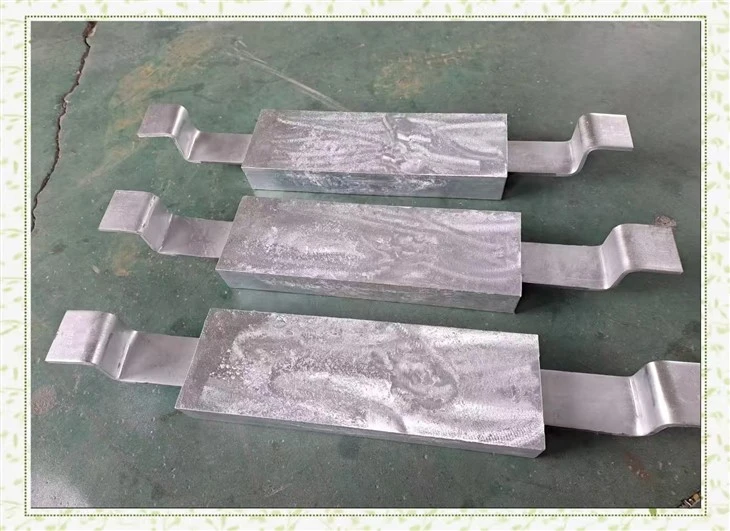
Before we explore their use in marine cages, let's first understand what marine sacrificial anodes are. Marine sacrificial anodes are a crucial part of corrosion control in marine environments. They work on the principle of galvanic corrosion, where a more reactive metal (the anode) is connected to the metal structure (the cathode) that needs protection. The anode corrodes preferentially, sacrificing itself to protect the cathode from corrosion.
There are different types of marine sacrificial anodes, including aluminum, zinc, and magnesium anodes. Each type has its own set of properties and is suitable for different applications based on factors such as the type of metal to be protected, the temperature of the seawater, and the level of electrical conductivity. For more information on sacrificial anodes for offshore installations, you can visit Sacrificial Anodes for Offshore Installations.
The Corrosion Challenge in Marine Cages
Marine cages are structures used in aquaculture to contain and rear fish and other aquatic organisms. They are typically made of metals such as steel or aluminum, which are prone to corrosion in the harsh marine environment. Corrosion can weaken the structural integrity of the cages, leading to potential failures and losses. It can also pose a risk to the health of the aquatic organisms due to the release of metal ions into the water.
The corrosion process in marine cages is influenced by several factors, including the salinity of the seawater, the presence of oxygen, the temperature, and the flow rate of the water. High salinity levels increase the electrical conductivity of the seawater, accelerating the corrosion process. Oxygen is also essential for corrosion to occur, and the presence of dissolved oxygen in seawater can significantly affect the rate of corrosion.
Potential Benefits of Using Marine Sacrificial Anodes in Marine Cages
Using marine sacrificial anodes in marine cages can offer several benefits. Firstly, they can provide effective corrosion protection for the metal components of the cages. By sacrificing themselves, the anodes prevent the corrosion of the cage structure, extending its lifespan and reducing the need for frequent repairs or replacements. This can result in significant cost savings in the long run.
Secondly, marine sacrificial anodes can help maintain a stable and healthy environment for the aquatic organisms in the cages. By preventing the release of metal ions into the water due to corrosion, the anodes reduce the risk of toxicity to the fish and other organisms. This can improve the overall health and growth of the aquatic population, leading to higher yields and better quality products.
Another advantage of using marine sacrificial anodes is their ease of installation and maintenance. They can be easily attached to the cage structure using simple methods such as welding or bolting. Once installed, they require minimal maintenance, only needing to be periodically inspected and replaced when they have been consumed.
Considerations for Using Marine Sacrificial Anodes in Marine Cages
While the use of marine sacrificial anodes in marine cages offers many benefits, there are also several considerations that need to be taken into account. One of the main considerations is the selection of the appropriate type of anode. As mentioned earlier, different types of anodes have different properties and are suitable for different applications. For marine cages, aluminum anodes are often a popular choice due to their high efficiency, long service life, and relatively low cost. However, the specific type of anode to be used should be determined based on factors such as the type of metal used in the cage, the environmental conditions, and the expected service life of the cage.
Another consideration is the sizing and placement of the anodes. The size of the anodes should be carefully calculated to ensure that they provide sufficient protection for the cage structure. If the anodes are too small, they may not be able to provide adequate protection, while if they are too large, they may be wasted and increase the cost. The placement of the anodes is also crucial, as they need to be positioned in areas where corrosion is most likely to occur. This may require a detailed analysis of the cage design and the environmental conditions.
In addition, the impact of the anodes on the aquatic environment needs to be considered. While the anodes are designed to sacrifice themselves to protect the cage structure, they do release metal ions into the water as they corrode. These metal ions can have an impact on the water quality and the health of the aquatic organisms. Therefore, it is important to ensure that the use of anodes does not exceed the acceptable limits of metal ion concentrations in the water.
Case Studies and Real-World Applications
There have been several case studies and real-world applications of using marine sacrificial anodes in marine cages. In one study, a fish farm in a coastal area installed aluminum sacrificial anodes on their steel marine cages. After a period of one year, the cages showed significantly less corrosion compared to cages without anodes. The fish in the cages with anodes also showed better growth and health, indicating that the anodes had a positive impact on the aquatic environment.
In another application, a large aquaculture company in a tropical region used zinc sacrificial anodes on their aluminum marine cages. The anodes were carefully sized and placed based on the cage design and the environmental conditions. After two years of operation, the cages remained in good condition, with only minor signs of corrosion. The company reported significant cost savings due to the reduced need for cage repairs and replacements.
Conclusion
In conclusion, marine sacrificial anodes can be effectively used in marine cages to provide corrosion protection and maintain a healthy aquatic environment. However, careful consideration needs to be given to the selection, sizing, and placement of the anodes, as well as their impact on the aquatic environment. As a supplier of Marine Sacrificial Anodes, I have the expertise and experience to help you choose the right anodes for your marine cages. If you are interested in learning more about our products or discussing your specific requirements, please feel free to contact us. We look forward to working with you to ensure the long-term success of your aquaculture operations.
References
- Jones, D. A. (1996). Principles and Prevention of Corrosion. Prentice Hall.
- Uhlig, H. H., & Revie, R. W. (1985). Corrosion and Corrosion Control: An Introduction to Corrosion Science and Engineering. Wiley.
- Fontana, M. G. (1986). Corrosion Engineering. McGraw-Hill.