

Cost - effective ways to conduct saltwater electrolysis are of great interest to many industries, from water treatment to chemical production. As a saltwater electrolysis supplier, I've witnessed firsthand the importance of finding efficient and economical methods for this process. In this blog, I'll share some insights on how to achieve cost - effective saltwater electrolysis.
Understanding Saltwater Electrolysis
Before delving into cost - effective methods, it's essential to understand the basics of saltwater electrolysis. Saltwater, primarily composed of sodium chloride (NaCl) and water (H₂O), undergoes a chemical reaction when an electric current is passed through it. At the anode, chloride ions (Cl⁻) are oxidized to form chlorine gas (Cl₂), while at the cathode, water molecules are reduced to produce hydrogen gas (H₂) and hydroxide ions (OH⁻). The overall reaction can be represented as:
2NaCl + 2H₂O → Cl₂ + H₂+ 2NaOH
This reaction forms the basis of various applications, such as disinfection, chemical synthesis, and desalination.
Optimizing Electrode Selection
One of the key factors in cost - effective saltwater electrolysis is the choice of electrodes. The electrodes play a crucial role in facilitating the electrochemical reactions and can significantly impact the efficiency and longevity of the electrolysis system.
Material Selection
- Dimensionally Stable Anodes (DSAs): These are widely used in saltwater electrolysis due to their high catalytic activity and long lifespan. DSAs are typically made of a titanium substrate coated with a precious metal oxide, such as ruthenium oxide (RuO₂) or iridium oxide (IrO₂). The precious metal oxide coating enhances the electrode's performance by reducing the overpotential required for the oxidation of chloride ions, thereby increasing the efficiency of chlorine production. Additionally, the titanium substrate provides excellent corrosion resistance, ensuring the durability of the electrode in a saltwater environment.
- Graphite Electrodes: Graphite is a relatively inexpensive electrode material that can be used in some saltwater electrolysis applications. It has good electrical conductivity and chemical stability. However, graphite electrodes tend to erode over time, especially at high current densities, which can lead to increased maintenance costs and reduced system efficiency. Therefore, graphite electrodes are more suitable for small - scale or low - cost applications where long - term durability is not a primary concern.
Electrode Design
- Surface Area: Increasing the surface area of the electrodes can enhance the efficiency of saltwater electrolysis. A larger surface area provides more active sites for the electrochemical reactions, allowing for a higher current density and faster reaction rates. This can be achieved through various methods, such as using porous electrodes or electrodes with a high - aspect - ratio design.
- Electrode Spacing: The spacing between the anode and cathode also affects the performance of the electrolysis system. A smaller electrode spacing reduces the resistance of the electrolyte, which in turn decreases the energy consumption of the system. However, too small a spacing can lead to short - circuits or the formation of gas bubbles that can impede the flow of the electrolyte. Therefore, an optimal electrode spacing needs to be determined based on the specific application and operating conditions.
Controlling Operating Conditions
Another important aspect of cost - effective saltwater electrolysis is the control of operating conditions, including temperature, pH, and current density.
Temperature
- Optimal Temperature Range: The temperature of the saltwater electrolyte can have a significant impact on the efficiency of electrolysis. Generally, increasing the temperature can enhance the reaction rates and reduce the overpotential, leading to higher efficiency. However, excessive temperatures can also cause problems, such as increased corrosion of the electrodes and the evaporation of the electrolyte. For most saltwater electrolysis applications, an optimal temperature range of 20 - 40°C is recommended.
- Temperature Control: To maintain the optimal temperature, a cooling or heating system may be required, depending on the ambient temperature and the heat generated during the electrolysis process. This can add to the initial investment and operating costs of the system, but it can also improve the overall efficiency and longevity of the equipment.
pH
- pH Effect on Reactions: The pH of the saltwater electrolyte affects the chemical reactions occurring at the electrodes. In general, a slightly alkaline pH (around 8 - 9) is favorable for saltwater electrolysis, as it promotes the formation of hypochlorous acid (HOCl), which is a more effective disinfectant than chlorine gas. At lower pH values, more chlorine gas is produced, while at higher pH values, the formation of hypochlorite ions (OCl⁻) is favored.
- pH Adjustment: To control the pH, additives such as sodium hydroxide (NaOH) or hydrochloric acid (HCl) may be used. However, the addition of chemicals can increase the operating costs and may also introduce impurities into the system. Therefore, it's important to find a balance between pH control and cost - effectiveness.
Current Density
- Optimal Current Density: The current density, which is the amount of current per unit area of the electrode, has a direct impact on the efficiency and productivity of saltwater electrolysis. A higher current density can lead to faster reaction rates and higher production yields. However, excessive current density can cause problems, such as increased electrode overpotential, electrode corrosion, and the formation of unwanted by - products. Therefore, an optimal current density needs to be determined based on the electrode material, electrolyte composition, and operating temperature.
- Current Density Control: To maintain the optimal current density, a power supply with precise current control capabilities is required. This can ensure that the electrolysis system operates at maximum efficiency while minimizing energy consumption and electrode wear.
Utilizing Advanced Electrolysis Technologies
In recent years, several advanced electrolysis technologies have emerged that can improve the cost - effectiveness of saltwater electrolysis.
Membrane Electrolysis
- Principle: Membrane electrolysis uses a semi - permeable membrane to separate the anode and cathode compartments. The membrane allows the passage of certain ions while blocking others, which can improve the selectivity of the electrochemical reactions and reduce the formation of unwanted by - products. For example, in a membrane - based saltwater electrolysis system, the membrane can prevent the mixing of chlorine gas and hydrogen gas, which can improve the safety and efficiency of the process.
- Benefits: Membrane electrolysis can also reduce the energy consumption of the system by minimizing the overpotential required for the reactions. Additionally, it can produce high - purity products, such as chlorine gas and sodium hydroxide, which are valuable in various industries. However, the use of membranes can increase the initial investment and operating costs of the system, as membranes need to be replaced periodically and require careful maintenance.
Flow - Through Electrolysis Cells
- Principle: Flow - through electrolysis cells allow the continuous flow of the saltwater electrolyte through the cell, which can improve the mass transfer of the reactants and products. This can enhance the efficiency of the electrochemical reactions and reduce the concentration polarization, which is a phenomenon that occurs when the concentration of the reactants at the electrode surface becomes depleted.
- Benefits: Flow - through electrolysis cells can also increase the productivity of the system by allowing for a higher throughput of the electrolyte. Additionally, they can be easily scaled up for large - scale applications, making them suitable for industrial use.
Considering System Integration and Automation
To achieve maximum cost - effectiveness, it's important to consider the integration and automation of the saltwater electrolysis system.

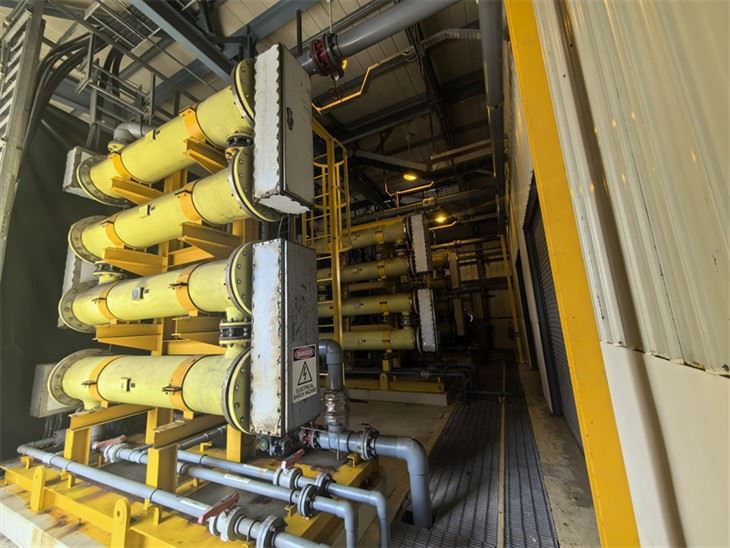
System Integration
- Combining with Other Processes: Saltwater electrolysis can be integrated with other processes, such as water treatment, desalination, or chemical synthesis, to create a more efficient and cost - effective system. For example, in a water treatment plant, the chlorine produced by saltwater electrolysis can be used directly for disinfection, eliminating the need for the storage and transportation of chlorine gas.
- Energy Recovery: Some saltwater electrolysis systems can recover energy from the hydrogen gas produced during the process. This can be done through fuel cells or other energy conversion devices, which can reduce the overall energy consumption of the system.
Automation
- Process Control: Automation can improve the efficiency and reliability of saltwater electrolysis by continuously monitoring and adjusting the operating conditions. For example, an automated system can control the current density, temperature, and pH of the electrolyte based on the real - time feedback from sensors. This can ensure that the system operates at optimal conditions, reducing energy consumption and electrode wear.
- Remote Monitoring: Remote monitoring capabilities allow operators to monitor the performance of the saltwater electrolysis system from a distance. This can enable timely maintenance and troubleshooting, reducing downtime and improving the overall productivity of the system.
Conclusion
In conclusion, there are several cost - effective ways to conduct saltwater electrolysis, including optimizing electrode selection, controlling operating conditions, utilizing advanced electrolysis technologies, and considering system integration and automation. As a saltwater electrolysis supplier, we are committed to providing our customers with high - quality equipment and solutions that can help them achieve efficient and economical saltwater electrolysis.
If you're interested in learning more about our Seawater Electro Chlorination System or Salt Water Electro Chlorination System, or if you have any questions about saltwater electrolysis, please feel free to contact us for a procurement discussion. We look forward to working with you to meet your specific needs.
References
- Bard, A. J., & Faulkner, L. R. (2001). Electrochemical Methods: Fundamentals and Applications. Wiley.
- Davis, J. A., & Kent, D. B. (1990). Surface Complexation Modeling: Hydrous Ferric Oxide. Wiley.
- Revie, R. W. (2008). Corrosion and Corrosion Control: An Introduction to Corrosion Science and Engineering. Wiley.