

A seawater electrolyser is a remarkable piece of technology that has gained significant attention in recent years, especially in the context of sustainable energy and chemical production. As a seawater electrolyser supplier, I am excited to delve into the main components of this essential device. Understanding these components is crucial for anyone interested in the technology, whether they are potential buyers, researchers, or industry enthusiasts.
Anode
The anode is one of the most critical components of a seawater electrolyser. It is the electrode where oxidation occurs during the electrolysis process. In seawater electrolysis, the anode is typically made of a material that can withstand the harsh chemical environment of seawater and promote the desired oxidation reactions.
One common material used for anodes in seawater electrolysers is titanium coated with a mixed metal oxide (MMO). Titanium is highly corrosion - resistant, which is essential as it is constantly in contact with seawater. The MMO coating, usually composed of metals such as ruthenium, iridium, or platinum, provides catalytic activity for the oxidation reactions. For example, in the production of chlorine from seawater, the anode facilitates the reaction (2Cl^- \to Cl_2+ 2e^-). The choice of MMO composition can be tailored to optimize the efficiency and selectivity of the anode for different applications. For instance, an anode with a higher iridium content may be more suitable for applications where oxygen evolution is also a concern, as it can help control the side reactions.
Cathode
The cathode is the electrode where reduction occurs. In a seawater electrolyser, the cathode is responsible for reactions such as the reduction of water to produce hydrogen gas ((2H_2O + 2e^- \to H_2+2OH^-)). Similar to the anode, the cathode material needs to be carefully selected to ensure high efficiency and durability.
Nickel is a popular choice for cathodes in seawater electrolysers. It has good catalytic activity for the hydrogen evolution reaction and is relatively inexpensive compared to some noble metals. Another option is stainless steel, which is also corrosion - resistant and can be used in certain seawater electrolysis applications. In some advanced designs, the cathode may be modified with catalysts such as platinum or palladium nanoparticles to enhance the reaction rate. These catalysts can lower the overpotential required for the hydrogen evolution reaction, thereby improving the overall energy efficiency of the electrolyser.
Electrolyte
The electrolyte in a seawater electrolyser is, of course, seawater itself. Seawater is a complex mixture of various salts, mainly sodium chloride ((NaCl)), magnesium chloride ((MgCl_2)), and calcium chloride ((CaCl_2)). The presence of these salts provides the ions necessary for the conduction of electricity during the electrolysis process.

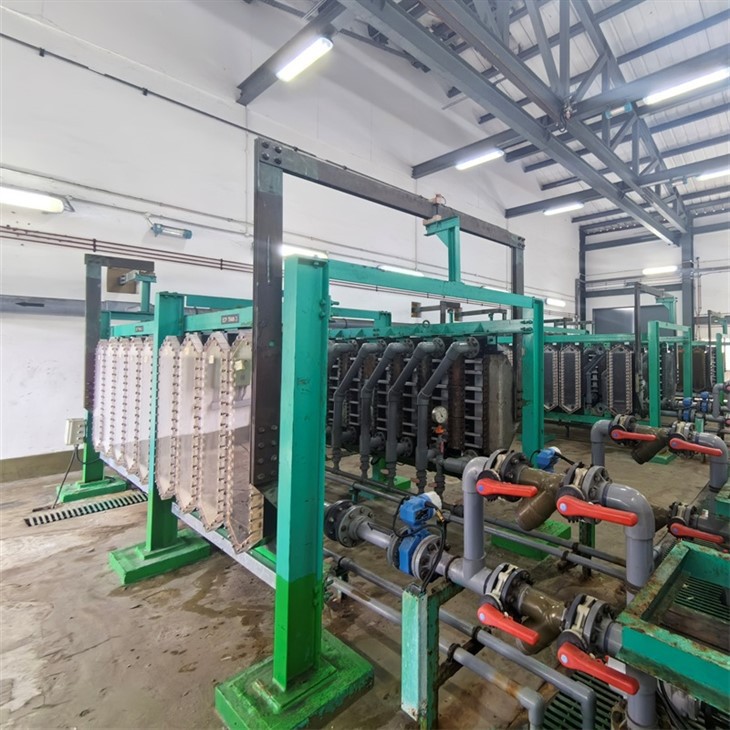
However, the use of seawater as an electrolyte also presents some challenges. One of the main issues is the presence of impurities such as sulfates, carbonates, and organic matter. These impurities can cause fouling of the electrodes and reduce the efficiency of the electrolyser over time. To address this, pre - treatment steps are often required. Filtration can be used to remove large particles and suspended solids, while chemical treatment can be employed to remove dissolved impurities. For example, adding a small amount of acid can help prevent the precipitation of carbonates on the electrodes.
Membrane
In many seawater electrolysers, a membrane is used to separate the anode and cathode compartments. The membrane serves several important functions. Firstly, it prevents the mixing of the products generated at the anode and cathode. For example, in a seawater electrolyser producing chlorine and hydrogen, the membrane prevents the chlorine gas from reacting with the hydrogen gas, which could be dangerous.
Secondly, the membrane allows the selective transport of ions. In a proton - exchange membrane (PEM) seawater electrolyser, the membrane allows the passage of protons ((H^+)) from the anode to the cathode while blocking the passage of other ions and molecules. This selective ion transport is crucial for maintaining the desired electrochemical reactions and improving the efficiency of the electrolyser.
There are different types of membranes available for seawater electrolysers. Perfluorosulfonic acid (PFSA) membranes, such as Nafion, are widely used in PEM electrolysers due to their high proton conductivity and chemical stability. However, these membranes can be expensive, and research is ongoing to develop more cost - effective alternatives.
Bipolar Plates
Bipolar plates are used in electrolyser stacks to connect multiple individual electrolysis cells in series. They serve as electrical conductors, allowing the flow of current between adjacent cells. In addition, bipolar plates also play a role in distributing the electrolyte evenly across the electrodes and removing the products of the electrolysis reactions.
Bipolar plates are typically made of materials with high electrical conductivity and corrosion resistance. Graphite is a common material for bipolar plates in some seawater electrolysers due to its good electrical conductivity and chemical stability. However, graphite bipolar plates can be brittle and may require careful handling. Metal bipolar plates, such as stainless steel or titanium, are also used. These metal plates can be coated with a conductive and corrosion - resistant layer to improve their performance.
Cooling System
During the operation of a seawater electrolyser, a significant amount of heat is generated due to the electrochemical reactions and the resistance of the electrical circuit. If not properly managed, this heat can cause a decrease in the efficiency of the electrolyser and may even damage the components.
A cooling system is therefore essential to maintain the optimal operating temperature of the electrolyser. Water - cooled systems are commonly used in seawater electrolysers. The cooling water can be circulated through channels in the bipolar plates or around the electrolyser cells to remove the heat. In some cases, a heat exchanger may be used to transfer the heat from the cooling water to the surrounding environment. The design of the cooling system needs to be carefully optimized to ensure efficient heat transfer while minimizing the energy consumption of the cooling process.
Control System
A control system is crucial for the safe and efficient operation of a seawater electrolyser. The control system monitors various parameters such as temperature, pressure, current, and voltage, and adjusts the operating conditions accordingly.
For example, if the temperature of the electrolyser exceeds a certain limit, the control system can increase the flow rate of the cooling water or reduce the current to prevent overheating. The control system also ensures that the electrolyser operates within the safe voltage and current ranges to avoid damage to the electrodes and other components. In addition, the control system can be used to start and stop the electrolyser, and to perform diagnostic tests to detect any potential problems. Modern control systems often use programmable logic controllers (PLCs) and sensors to achieve precise control and monitoring of the electrolyser.
As a seawater electrolyser supplier, we offer a range of high - quality electrolysers that incorporate these key components. Our products are designed to provide efficient, reliable, and sustainable solutions for various applications. Whether you are interested in Salt Water Electro Chlorination System or Seawater Electro Chlorination System, we have the expertise and technology to meet your needs.
If you are considering purchasing a seawater electrolyser for your project, we encourage you to contact us for a detailed discussion. Our team of experts can help you select the most suitable electrolyser based on your specific requirements and provide you with comprehensive technical support. We look forward to working with you to achieve your goals in the field of seawater electrolysis.
References
- Bard, A. J., & Faulkner, L. R. (2001). Electrochemical Methods: Fundamentals and Applications. John Wiley & Sons.
- Larminie, J., & Dicks, A. (2003). Fuel Cell Systems Explained. John Wiley & Sons.
- Wang, X., & Li, Y. (2018). Seawater electrolysis for hydrogen production: A review. Journal of Power Sources, 376, 33 - 48.