

Seawater treatment is a crucial process for various industries and regions facing water scarcity. It involves removing impurities, salts, and other contaminants from seawater to make it suitable for different applications, such as drinking water supply, industrial processes, and agricultural irrigation. There are several methods available for seawater treatment, each with its own set of advantages and limitations. In this blog, as a seawater ultrafiltration supplier, I will compare seawater ultrafiltration with other seawater treatment methods to help you understand which option might be the best fit for your specific needs.
Seawater Ultrafiltration: An Overview
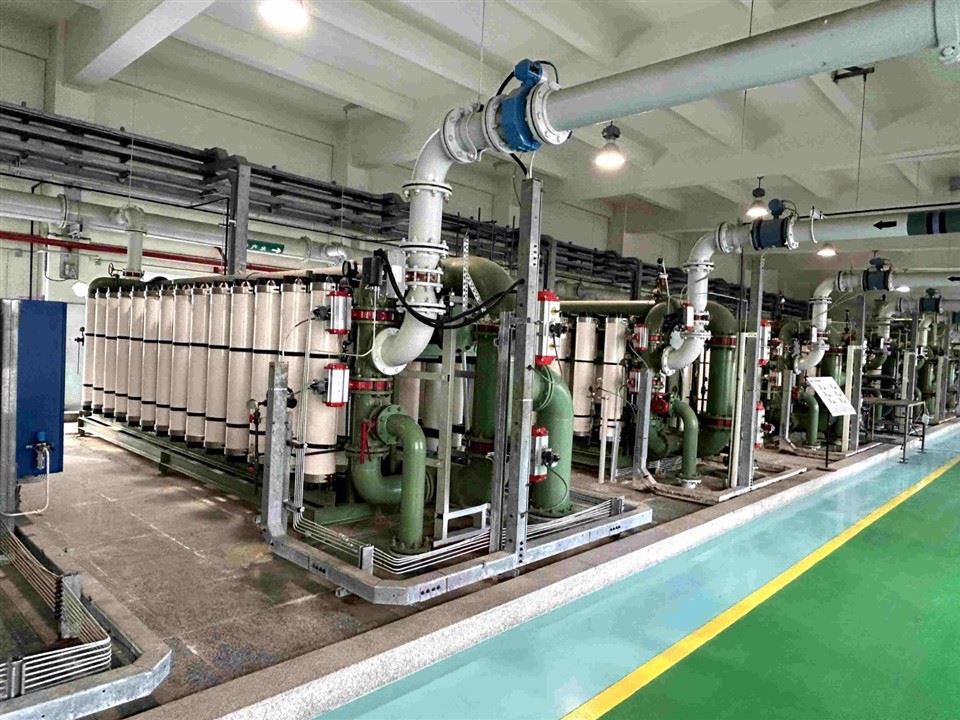
Seawater ultrafiltration (UF) is a membrane - based filtration process that uses a semi - permeable membrane to separate particles, colloids, bacteria, and some macromolecules from seawater. The pore size of UF membranes typically ranges from 0.001 to 0.1 micrometers. This allows water and small dissolved substances to pass through while retaining larger contaminants.
One of the key advantages of seawater ultrafiltration is its high efficiency in removing suspended solids, turbidity, and microbiological contaminants. It can significantly reduce the load on subsequent treatment processes, such as reverse osmosis (RO). UF systems are also relatively compact and easy to operate and maintain. They can be automated, which reduces the need for constant human supervision.
Comparison with Reverse Osmosis (RO)
Reverse osmosis is one of the most widely used seawater treatment methods for desalination. It uses a high - pressure pump to force seawater through a semi - permeable membrane, which allows water molecules to pass through while rejecting salts and other dissolved solids.
1. Contaminant Removal
While RO is highly effective in removing salts and most dissolved solids, seawater ultrafiltration is mainly focused on removing larger particles and microorganisms. For instance, RO can achieve salt rejection rates of up to 99% or more, making it ideal for producing high - quality drinking water from seawater. On the other hand, UF can remove particles, bacteria, and some viruses, but it does not significantly reduce the salt content. However, UF can serve as a pre - treatment step for RO. By removing suspended solids and microorganisms, UF can protect the RO membranes from fouling, which can extend the lifespan of the RO membranes and improve the overall efficiency of the desalination process.
2. Energy Consumption
RO systems generally consume more energy compared to UF systems. The high - pressure pumps required to overcome the osmotic pressure in RO processes demand a significant amount of electricity. In contrast, UF operates at relatively low pressures, typically between 1 and 10 bar, resulting in lower energy consumption. This makes UF a more energy - efficient option for the initial stages of seawater treatment.
3. Cost
The capital cost of RO systems is usually higher than that of UF systems due to the complexity of the equipment and the need for high - pressure components. Additionally, the replacement cost of RO membranes is relatively high, as they are more sensitive to fouling and require regular replacement. UF membranes, while still an investment, are generally less expensive to replace and maintain.
Comparison with Demineralization System
Demineralization systems are designed to remove minerals and salts from water. These systems often use ion - exchange resins to exchange unwanted ions for more desirable ones.
1. Treatment Mechanism
Seawater ultrafiltration relies on physical separation through a membrane, while demineralization systems use chemical reactions in ion - exchange resins. UF is effective in removing particulate matter and some microorganisms, but it has limited ability to remove dissolved ions. Demineralization systems, on the other hand, can target specific ions and achieve a high degree of demineralization.
2. Water Quality
Demineralization systems can produce water with extremely low mineral content, which is suitable for applications that require high - purity water, such as in some industrial processes. UF, however, does not achieve the same level of demineralization. But UF can be used as a pre - treatment for demineralization systems to remove particles that could potentially foul the ion - exchange resins, improving the performance and lifespan of the demineralization system.
3. Regeneration and Maintenance
Demineralization systems require periodic regeneration of the ion - exchange resins, which involves the use of chemicals such as acids and bases. This process can be complex and costly, and it also generates waste products that need to be properly disposed of. UF systems have a simpler maintenance process, mainly involving membrane cleaning and replacement at appropriate intervals.

Comparison with Seawater Desalination System
A seawater desalination system is a comprehensive treatment system that may combine multiple treatment processes, including pre - treatment, desalination, and post - treatment.
1. System Complexity
Seawater ultrafiltration is a single - step or part of a pre - treatment process, while a seawater desalination system is a more complex setup. A typical seawater desalination system may include UF as a pre - treatment step, followed by RO for desalination and additional post - treatment processes to adjust the water quality. The complexity of a desalination system means higher installation and operation costs, as well as more extensive training requirements for operators.
2. Water Production Capacity
Desalination systems are designed to produce large volumes of desalinated water, often for municipal water supply or large - scale industrial use. UF systems can be scaled up, but they are more commonly used for smaller - scale applications or as a pre - treatment for larger desalination plants. However, the modular design of UF systems allows for relatively easy expansion to meet increasing water treatment needs.
Comparison with Brackish Water Desalination
Brackish water desalination is the process of treating water with a lower salt concentration than seawater. The treatment methods used for brackish water are similar to those for seawater but may be adjusted due to the lower salinity.
1. Salinity Tolerance
Seawater ultrafiltration is not designed to reduce salinity significantly, whether for seawater or brackish water. Brackish water desalination methods, such as RO or electrodialysis, are more focused on reducing the salt content. However, UF can be used as a pre - treatment for brackish water desalination to remove particulate matter and microorganisms, just as it is used in seawater treatment.
2. Treatment Efficiency
Since brackish water has a lower salt concentration, the treatment processes for brackish water desalination may be less energy - intensive compared to seawater desalination. UF systems can still play an important role in both cases by improving the overall efficiency of the subsequent desalination processes through pre - treatment.
Why Choose Seawater Ultrafiltration?
Seawater ultrafiltration offers several unique benefits that make it an attractive option for many seawater treatment applications. Its ability to remove suspended solids, turbidity, and microorganisms makes it an excellent pre - treatment step for other treatment processes. The low - pressure operation results in lower energy consumption and reduced operating costs. Additionally, the compact design and ease of maintenance of UF systems make them suitable for a wide range of applications, from small - scale industrial use to large - scale desalination plants.
If you are in the market for a seawater treatment solution, seawater ultrafiltration could be a great starting point. Whether you need a stand - alone pre - treatment system or a component of a larger desalination system, our company can provide you with high - quality seawater ultrafiltration products. We are committed to helping you find the most efficient and cost - effective solution for your specific seawater treatment needs. If you are interested in learning more about our products or would like to discuss your project in detail, please reach out to us for a consultation. We look forward to working with you to meet your water treatment requirements.
References
- Cheryan, M. (1998). Ultrafiltration and Microfiltration Handbook. Technomic Publishing.
- Greenlee, L. F., Lawler, D. F., Freeman, B. D., Marrot, B., & Moulin, P. (2009). Reverse osmosis desalination: Water sources, technology, and today's challenges. Water Research, 43(9), 2317 - 2348.
- Strathmann, H. (2010). Synthetic membranes for water purification: Status and future. Journal of Membrane Science, 361(1 - 2), 1 - 8.